Archive for the ‘Art Projects’ Category

Our church began a new tradition last year, a friendly gingerbread competition. Tonight is this years night for the event. Last year since my daughter was teaming up with her Sunday school class, my son and I teamed up with one of his friends and his mom. This year we bailed and have no entry.

I’m a little bummed and feel like a slacker. As I was looking through the pictures of our entry from last year I reminisced about our sugary fun and thought I’d share our entry with you as well. (Forgive me for the quality of the pictures. It was dark and I didn’t take the time to use my tripod.)

gingerbreadchallenge1

We kinda procrastinated and tackled ours in one long sticky afternoon. Our base was rice cereal treats molded to form the perfect sledding hill, which atop sat our snow house made of sugar cubes glued together with icing.

gingerbreadchallenge2

The only rules were that it had to be edible, so the only gingerbread we used was the roof of the house and that was covered with gum shingles. Gum shingles withstand a lot of snow in elf land. The house is still in one piece in my friends china cabinet. Trees were made from ice cream cones covered in icing and turned upside down. The bushes were marshmallows covered in the same green icing.

These little elves were made from a homemade gum paste concoction.

gingerbreadchallenge3

The sled is made from a fruit roll-up.

gingerbreadchallenge5

Look a snow angel!

gingerbreadchallenge4

We had a blast that day playing with sugar and all things sweet. Tonight I’ll certainly enjoy seeing the creations of other busy hands. Maybe next year well have a go at it again.

Did you make a gingerbread display this year? Or have you made a memorable one in the past?

Merry Christmas!

selfport16

Looking for a gift idea that will allow your children (or yourself) to flex your creative wings? Or just an art project for a rainy day?

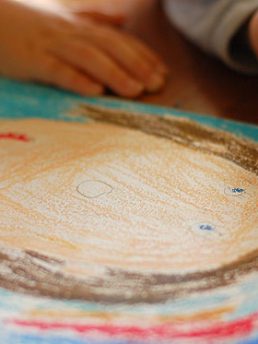
Here’s an easy one, oil pastel self portraits. No liquids are involved (so no spills!) and the project can easily be stored away if not finished at the first sitting to return to later. No expensive supplies. No special techniques. It’s basically fancy coloring. So whether you’re 5 or 85…4 or 94…3 or 103…well…if you’re 103 and can still color…well then…you rock!

You don’t have to make it a self portrait, any theme or topic would work. We chose self portraits because it’s always fun to see how people view themselves plus it was a nice change of pace to the usual photo portrait for the grandparents. But if grandaddy is a fisherman, you could draw him a picture of the “one that got away” or maybe a picture of his boat. Or if Aunt Judy is a renowned baker? What about a picture of her famous chocolate chip cookies? You get the picture.

But, again self portraits are always fun and you could begin, or add to an existing portrait gallery with an original work of art. My children created these a few years back for my parents, who can now say they have an official portrait gallery like no other art museum around. Priceless.

selfport3

Remember this is supposed to be a fun, creative project. Achieving the perfect or realistic portrait is not the point. I’m pretty sure my son’s ears have never looked like that before but it’s a cute picture. It’s neat to see different styles and interpretations emerge at such a young age.

What you’ll need to get started:

- art paper (something medium to heavy weight and acid free; watercolor or medium drawing paper works well; we used 9 x 12″ and it was around $7-$10 for a pack) and some scratch paper for practice

selfport4b

- oil pastels (nothing expensive; this pack was around $5) and pencils w/ eraser

selfport4

- cotton swabs (because it’s always important to have good, clean ears when creating a masterpiece)

selfport21

- spray fixative

selfport5

- framing (since you’ll be using spray fixative, you don’t have to use a frame with glass; if you choose to use a frame with glass you’ll need a mat or the oil pastel, even with fixative applied, will stick to the glass)

And of course a willing artist. My good friend’s sweet little daughter, Mary Helen, was all about coloring – what a great artist. Watch as she shows us how…

Here we go!

Step 1: You may want to begin by doing preliminary sketching on some scratch paper to practice, compose your picture and think about what color choices you will use in the final. This step isn’t necessary but some artist like to take some time to think it though.

Step 2: When ready to draw final, lightly sketch portrait (or whatever the artist has decided to draw) on the art paper. If mistakes are made, you can easily erase just don’t go crazy digging into the paper.

selfport6

If you’re drawing a portrait try to fill the paper with the face. Add any details or decorations you’d like.

selfport7

Look, she’s drawing her cute little dimple.

selfport8

What a stylish shirt Mary Helen.

selfport14

Just take your time.

selfport15

Step 3: After sketch is complete, begin “coloring” with the oil pastels.

selfport16

Oil pastels are quite a bit softer than crayon so it may help to practice a tad on the scratch paper to see what happens when you press down. Since there is no point, the edge of the pastel will have to be used to get into smaller areas.

selfport9Be sure to fill in all areas, covering every section of the paper with color.

selfport10

She’s working very hard I can tell.

selfport18

Very lovely color palette Mary Helen. I love the rainbow.

selfport11

Mary Helen went back over her colors to darken the areas which I think looks mighty nice.

selfport17

Adding more oil pastel to cover the paper well takes time but it’s worth it.

selfport12

Step 4: When coloring is complete and picture perfect, get the cotton swabs and begin cleaning your ears. Naaaah, hopefully you already did that this morning. Use the cotton swab to “blend” each separate area of color, almost pressing the pastel into the paper.

selfport13

You’re not trying to blend colors into each other – unless that’s the style you’re looking for, and if so, go for it! The cotton swab tip tends to want to ball up, so you’ll need to hold it right at the tip. Depending on the age of the artist, an adult may need to assist with this step.

selfport20

Step 5: (Sorry but I didn’t take a picture of this step. I had to run to the grocery store.) When drawing is complete, following directions on fixative container, spray artwork. Spray at least 3 times, letting dry between sprays according to directions.

Step 6: Oh, almost forgot! This is important! Sign the artwork with a dark pastel color. You can sign it before or after spraying with fixative.

Step 7: Frame and hang. Remember again, if you’re using a frame with glass you’ll need a mat. The pastel shouldn’t be able to touch the glass or it will stick. Since you’re using spray fixative, you can frame without using glass.

selfport22

Yea! You’re done. Now you can have a gallery party revealing the priceless artwork.

The most important thing to remember is to have fun!

Do you have any art project that would make a good gift idea? Please share.

.

Years ago we had a big blank wall over our sofa. I searched high and low for that perfect something to hang there but never found anything I liked or felt I could justify the money on. Plus I really like to have things in our home that mean something or serve a purpose, instead of just finding something to match the couch.


Finally I decided I would make something, or rather, in this instance, we would.


I mean, I have an art degree. I can do this, I thought.


So I headed out to the local art supply/craft store to pick up supplies. To make a long story short this is what we created, together, as a family.

masterpiece1

Composition? No. Balance? Huh? Harmony? Eh? We threw all the elements and principles of art out the window that day. I’m sure people who come over for a visit and don’t know that it was a finger painting (yep, finger painting) by 2 adults and 2 children (then ages 3 and 6) think, “Okay… and she’s got an art degree? No wonder she’s a stay-at-home-mom.”


But I know better. Plus we get to enjoy remembering that night we all circled the kitchen table every time we look at it – my son standing on a chair donning only his pull-ups so as not to mess up any clothes, my daughter in one of her dads white t’s down to her knees as a paint smock. What a fun, colorful memory. I hate I didn’t get pictures.


So if you have a wall space you’re looking to fill, want to make an addition to your valuable art collection or just the thought of getting covered with paint tickles your fancy, here’s how we did it.


First the supplies. Not much.


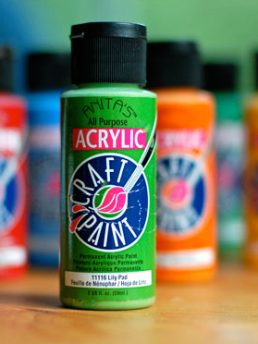
Acrylic paints. Inexpensive acrylics like these work great. We painted ours in 2003 and it’s doing just fine. Plus depending on the size canvas you choose, you’ll need lots of paint. Choose the colors you like. We used primaries along with orange, purple and a few brighter greens and yellows. We had white on hand as well for lightening if needed.

masterpiece2


A canvas. Many sizes are available and our local craft stores regularly offer coupons for 40% off one item. I like the ones with the deeper edge. Of course, you could always make your own.

masterpiece4

In addition, you’ll need some paper plates, paper towels and newspapers or other covering for the work surface. That’s it for supplies.


Oh, and these of course.

masterpiece5

Next prep a table for the fun by covering it with newspapers or whatever you have to protect it. An outside table would be a good idea if available.


Then prepare the paints on paper plates (perfect alliteration) like this. You’ll want at least one plate per person … precisely (there I go again).

masterpiece3

Here’s a tip. Pair colors that are side by side on the color wheel so as not to create mud, if they (and they will) get mixed together. For example, green and blue like shown, (like how I coordinated the paint colors with the paper plate decoration… so Martha), or yellow and orange and so forth. This is about as much art knowledge as you’ll need to understand.


I’ll try to explain. Colors on the color wheel that are next to each other will combine nicely. Colors opposite each other on the color wheel, or complimentary colors, when mixed make mud. (I’m just on a roll with the alliteration today!) The trick is to control the paint colors by not letting them combine in a yucky way.


So when everyone is dressed for the mess and everything is ready, place the plates around the table and begin painting. I did not gesso or prime the canvas. Every now and then, rotate the canvas and/or exchange plates, being careful to watch for the colors getting muddied. Whatever works for you. Be sure to cover the whole canvas. The more paint, the better. Texture is good, so glop it on!


This is not complicated. Be sure to relax and have fun – you can’t mess it up. And if it does get yucky, let it dry and paint over it again. You could even paint all one color then let dry and add another color if you’d like. It’s yours, do whatever you want. That’s the beauty of it – it’s your masterpiece.


When finished let dry and hang. Possibly plan a gallery opening for the event.


Have fun. I hope you end up with a priceless piece that you’ll never part with (there I go again with the alliteration – what’s up with me…).


And maybe it’ll match your couch too!  (Mine does.)


Here’s the supply list again:

Acrylic paints (get plenty)

Canvas

Paper plates, paper towels and newspaper (or something to protect work surface)

Fingers (with people attached)